What Are You Working On?
General mountain dulcimer or music discussions
Walmart has " Fas-n-Tite Brass (plated) Linoleum Nails (5/8" x #16) - 0.75 oz., Steel, $1.58 "
Those and a toothpick in the old hole might be a good choice.
Walmart has " Fas-n-Tite Brass (plated) Linoleum Nails (5/8" x #16) - 0.75 oz., Steel, $1.58 "
Those and a toothpick in the old hole might be a good choice.
Wally: right - other 2 are brass pins. Just deciding if I would go with the same type or replace all 3 with something else - yes, choices.
thanks
I received an email notification for a topic I'm watching. At the bottom there's a link to instantly unsubscribe from everything. I tried to click on the link but nothing happens. It might be a broken link.
Why remove the nail head? The nail head makes it easier to hold a string loop on. In addition, if you simply cut the nail head off with pliers you will have a sharp end. Half an inch in length should be enough if in a hole of the right size.
My main suggestion is Look at the other string anchors and try to match them. They might be screws, nails with heads, nails without heads, brass pins, or was it wood?
Thanks Robert -
Thanks Ken - (Glue the dowel in to the hole using wood glue. )
Marg, you can make a very good end pin with a nail. Drill a hole first then glue in a nail. Tapping in a nail will shock the dulcimer and possibly break something. Remove the nail head before installing. Set the nail about 3/4" deep....Robert
Hi, Marg. With regard to the Lazenby dulcimer I would not use wood filler on it. Instead I would plug the hole with a piece of hardwood dowel rod. You will need to measure the diameter of the hole when you take the screw out. You might need to enlarge the hole a bit to fit a readily available dowel. Glue the dowel in to the hole using wood glue. You will then need to drill a hole the diameter of the end pin or just a hair smaller and tap the pin in place. This hole should be drilled at a slight angle like the other ones. Those look like standard hitch pins. It might be hard to just by one. If you send me a private message with your address I'll send you one. I'm pretty sure I have a few of them downstairs in my shop. I won't be venturing down there for the next week or so until my eyes get adjusted to the cataract surgery I had yesterday. Hope this helps you.
Ken
"The dulcimer sings a sweet song."
Thanks Ken,
I think the geared violin tuners like Wittners - may be something to try. I don't want to widen the holes so, I may just keep the Sam Carroll with it's pegs. I have changed the ones in my Warren May dulcimers with the Grovers, without any adjustments. I don't want to do anything to the dulcimer, that couldn't be undone - like putting screws on the sides for gears.
Side note: The Lazenby dulcimer I just got is missing it's end Bass pin. (Looks to me as if someone maybe tried tightening the string and instead of it breaking, it just pulled the pin out.) Should I find an end pin like the others or replace all 3 - also should I put wood filler in the stripped hole?
Marg there are a couple of things to consider. First is whether you want friction tuners or geared tuners. Since you mention the Stewmac choices the Grovers are friction and the Five Star are geared. The second is cost. You can see the difference in price. Both of those install easily although you may need to make an adjustment in the size of the holes. Since you mention not changing the head design, have you considered replacing the wood pegs with geared violin tuners like Wittners? Here is a link to them: Wittner-finetune-violin-peg They may give a better look to the dulcimer and are priced between the two offered by Stewmac.
This is general information as I don't know the maker of your dulcimer and I am guessing it has a scroll peg head. If you have any questions, ask here or message me.
Ken
"The dulcimer sings a sweet song."
Friction tuners like Grovers offer tradition, while geared options like Five Star provide precision. Cost varies, and you might also consider replacing wood pegs with geared violin tuners like Wittners for a different look.
The fret markings clearly are a major feature of the claims. He states:
"In a stringed instrument, the combination, with the sounding board or base, of the separate parallel longitudinal bridge-bars, each having a group of four strings, a line of line of frets, and note-scales , and having the keys for the strings at one end of each bridge-bar set at the opposite ends of the sounding-board, substantially as herein set forth."
The drawing almost certainly has shape notes because he says:
"The note-scales may be made in characters such as are found in the “Sacred Harp” and in the “Temple Harp,” or indicated by do, re, mi, &c."
Actually, on close reading, it looks like it may only apply to the combination of the features, not to any on them singularly. Not to worry, it expired long ago. .
There are many patents for specific instrument designs which are more-or-less actually sort of trademarks. This is particularly true on "anyone-can-play-this" instruments.
I find the patent interesting because it reinforces our knowledge of many features as being broadly* known by 1880.
*The patentee resided in the flat Mid-Georgia country, not in the hills of KY-NC-WV-VA
@wally-venable - in the patent world, that is called 'making a broad claim'. However, anyone can create something that has a few slight differences and present it as something new. The patent holder would then have to shoulder the expense of legally defending their claim, which is often more trouble and expense than worth doing. In this case, the idea of claiming all possible sizes, shapes, and variations of a simple stringed instrument is patently ridiculous (pun intended).
I'm now thinking that perhaps this patent was actually for the system of fret marking on a simple learning/teaching instrument...shown on the drawings. There are something similar to shape-note symbols inscribed on each fret- identifying the notes produced at various positions on the fretboard. A patent for a specific method of teaching/learning using such fret markers would be more easily patentable, and one could then more logically include the broader claim that it applies to whatever size/shape of the base instrument. Does the patent description mention this marking system?
I just looked at the full 1880 patent filing. It is a good .PDF file with search capability.
It is interesting that the word "dulcimer" (or even "dul") does not appear in the text.
The description includes "The instrument may be made of any suitable style and form, and of any suitable size. I may also make the instrument with one stringed bridge, and adapted to be played as described."
It appears to be an attempt to patent ALL dulcimers in a single stroke.
"Greenbriar", I think was the name of the dulcimer shop.
Yes, the one you saw posted looks to be the same. This one, was a custom one made back in '89 for someone. Bob Lazenby, joined FOTMD a few years ago but after his welcome - nothing ever was posted. With your help and everyone here (I read the post from about 8 yrs ago on adding a fret or not, to one of Bob's dulcimers), maybe all the information I will find out but its a beautiful dulcimer and plays so nicely.
It just needs a few fixes (like one of the end pins is missing - trying to decide wood filler & another pin or all new something) but soon, I hope to be strumming and let it's voice ring.
thank you all
Thanks Ron for you reply and the images of the 2 different woods.
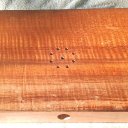
Someone I play dulcimer with thought it was Birdseye, I was just going on that. It's a Greenbrian Pigeon River dulcimer by Bob Lazenby.
You're probably correct, you would know and your 2 photos - this dulcimer doesn't look like the eyes in your photo but maybe more like the Leopard Wood grain. It didn't sound like the Birdseye made a good tonewood, so good it's not that. If it's Leopard Wood, hopefully that is a better wood for dulcimers. Are you familiar with Bob's Greenbrian dulcimers? I can't find out much information on them.
I love listening to your dulcimer samples on your web page. I tell many of the new players to check your site out. I have one of your capos but not one of your dulcimer's, as of yet. Thank you very much for your reply & steering me away from thinking - Birdseye
Here is a short bio on John:
1947 Born in Los Angeles, California
1950 Family moved to England
Instrument - making
1972 - 74 Training : Newark School of Violin Making. Pass with distinction
Music and Story-telling
1963 Met traditional music through Folk Clubs
1965 Started giving concerts, solo and in groups
~~~~~~~~~~~~~~~~~~~~~~
1976 Moved to Brittany
1978 LP "Douce-Amère" : traditional songs and instrumentals
(mostly with Appalachian Dulcimers)
1978 - 82 Member of the JOHN RENBOURN GROUP (vocals, dulcimers, violin,
mandolin). Tours + 3 LPs with the group.
since 1978 Solo concert tours: U.S.A., Germany, Ireland, England,
Italy, Hungary and France.
1985 LP "Spice of Life" : personal and traditional tunes and songs
(with Dan ar Bras, the Josquin des Prés Quartet etc.)
since 1996 Tours throughout France with the story-teller Alain Le Goff
for the story and music show ‘‘Baleines, baleines’’
2000 Creation of " LEGENDARY AIRS " , a solo show of ‘Stories told by Music itself’ (for all, rec. min. age 7 yrs ).
CD compilation of «Douce-Amère» + «Spice » (Kerig KCD185) : awarded "BRAVO" label from Trad Magazine.
2002 Creation of " WOLF ? " : a one man show, where the wolf is revealed through stories, with some music (for all, rec. min. 7 yrs ).
2018 Creation of " DREAMCATCHER " :
That's a pretty colorful journey.
John,
It is a lovely looking instrument with the Birdseye maple, nicely done
Ken,
Thanks for the information.
Ambrosia maple vs Birdseye maple - both maple but a good bit different - interesting.
( Flat sawn wood is not particularly recommended for instrument building as it makes the wood more difficult to bend without splitting. - After the finished applied, it is fairly stable.) Hope so
Here are 2 photos. Not very good quality, but you can see what I mean.
I once made an hourglass dulcimer completely out of birdseye maple. It looked wonderful, was somewhat heavy, had an OK tone. The wood behaved like plain hard maple when fashioning the dulcimer. I sold it to my younger brother.
Well, Birdseye maple is hard maple (acer saccharum). According to the Wood Database, the Birdseye figure comes from poor growing conditions where the tree attempts to get more sunlight by creating more buds. The buds looks like eyes when the wood is cut; especially when flat sawn. Flat sawn wood is not particularly recommended for instrument building as it makes the wood more difficult to bend without splitting. My guess is that once the wood is bent and a finished applied, it is fairly stable. I've never worked with it. As a dulcimer wood I think it is of average quality being more valued for its appearance than for its tonal properties. I'm sure there are other opinions out there so don't take this a rule.
Ken
"The dulcimer sings a sweet song."
What thoughts were you looking for:
(quality of it as a wood for a dulcimer or prone to cracking problems?)
I know nothing about the wood, was looking for some information - anything someone knew about Birdseye Maple, as a dulcimer wood
thanks for your thoughts:
Yes, it does have a brighter sound - it has very good responsive.
Thoughts on the quality of it as a wood for a dulcimer. Maybe used more in the past for guitars but other woods maybe better now as tone woods or any problems with cracking?
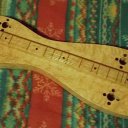
Photo of an older dulcimer, that so far is in beautiful shape.
I'll refer back to Ken's question: What thoughts were you looking for?
You seem to be satisfied with the dulcimer. Maybe you could be more explicit with the reason for your question/speculation about the quality of its, other woods, cracking problems. I couldn't see evidence of cracks in your photos.
thanks for your thoughts:
Yes, it does have a brighter sound - it has very good responsive.
Thoughts on the quality of it as a wood for a dulcimer. Maybe used more in the past for guitars but other woods maybe better now as tone woods or any problems with cracking?
Photo of an older dulcimer, that so far is in beautiful shape.
In my experience, figured wood is not good tonewood. Ken is probably right about it producing a brighter tone. Whether it would be responsive and capable of good sustain is another question.
That being said, so much is determined by the maker's design and process.
Many years ago the Guild of American Luthiers held a contest for the best guitar made with unconventional wood. The winning guitar was made from a shipping pallet.
Not sure what type of thoughts you are looking for Marg, but Birdseye maple is a pretty wood. It should produce a little brighter sound from it than from walnut or mahogany. Of course, other factors come in to play; e.g., shape, material of the top, VSL, depth of sound box, etc.
Ken
"The dulcimer sings a sweet song."
Thoughts on a Birdseye Maple dulcimer - back & sides?
@shanonmilan --the vast majority of us (traditionalists and moderns) play dulcimer horizontally -- "string side up" on our laps or on a table or stand. There are a few who play it more vertically -- like a guitar...

Hahahaha. You got me laughing and rolling on the floor on that one.
Indeed! Including Christ the Lord Is Risen Tomorrow...! (tada-bump)
Actually that would make a beautiful chord melody piece. : - )
I had a similar moment of realization about how to play blues on the harmonica. I just couldn't figure it out and thought those great blues harmonica players were just really good at bending notes. But one day in college I was playing some blues on the guitar with some people and someone joined, playing blues harmonica really badly . She was not good, but she was doing it, and on a break I asked to see her harmonica. Indeed, @jim-yates, as you say, it was an A harp and we were playing in E. Aha!  Cross harp, what a concept! To play straight on the harmonica, your tonic is the 4th hole, but to get those blue notes, your tonic is the 3 hole. I still can't play like Sonny Terry, but I can manage some amateur blues and have fun.
Indeed, the last Saturday is 30 March and Easter is the following day. Perhaps some may wish to celebrate the Appalachian dulcimer on IADD with a hymn or two.
It also happens to be Easter weekend this year, but since it's Saturday vs Sunday one hopes that doesn't affect too many people. Anyone hosting may be a bit too busy to make it to the park, but jellybeans for those who do!
Nice Marsha! Decades ago I played bass drum with Scottish Pipe Bands. Then a couple years before Covid I occasionally played dulcimer along with friends in a group called Pine island Sound. The I built the laptop Cajon below -- a Brazilian hand beaten box drum -- that I played with them until Covid sort of busted things up. I more or less "tuned" the Cajon to sound good around the key of D. It can be played soft or loud as well.
12"x18" x 2.75" The top is a fabulous piece of Oregon Myrtle, the sides maple and the back 'piano' Port Orford Cedar.
Can't find the pix I had of me with the group...
Looks like a good time. The Bodhran is a really cool instrument. For how deceptively simple they look, they are very complex. The soft but powerful tones fit great into almost any type of music in my opinion
Nate
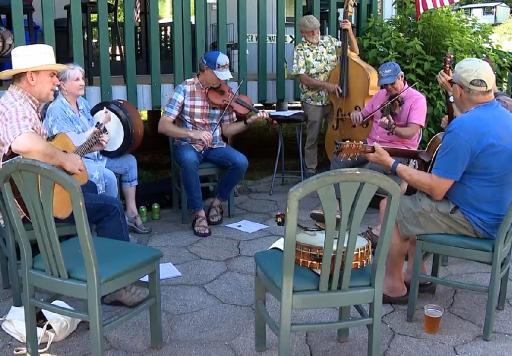
Sounds like a lot of fun Marsha. I was going to say that you need a banjo player, but I see that behind the man on the right that person might be playing a banjo. And to the right of man on the right that appears to by a banjo on the chair.
Ken
"The dulcimer sings a sweet song."
In my mountain community there are so many fun Jam sessions available. I wanted to have an instrument that I could use when the tunes get too fast or complicated for my dulcimer. A few years ago I bought a used Bodhran from a vender at a Dulcimer festival, found YouTube videos with lessons and in a couple of years I was “rockin’ it. I was going to buy a better one on our planned trip to Scotland/Ireland, but the pandemic hit and the trip was canceled. So I ordered one shipped here from a well known builder in Dublin and it totally upped my game. I still LOVE my dulcimer, but am having the time of my life playing the Bodhran.
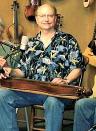
Photo is of the Jam I play with every Thursday night (April thru September) at a local tap-room:
At the risk on being a contrarian, I have had good success with keeping my dulcimer from going sharp as you go up the frets a different way that also helps with the bass buzzing problem. Rather than focusing on the saddle height, I find adjusting the nut or zero fret slightly higher allows me to keep a more consistent and lower action across the fret board. Yes, definitely, it sounds like your saddle is too high. When you get that resolved, and if you are in the mood for even more fine tuning, try raising your nut by maybe 10% and see if you can adjust your saddle down about the same percent. As with any adjustment, your mileage will vary.
Good luck and I think you are right in raising the nut.
Thank you Dusty this is very helpful information and visual context. I used to think there was no wrong way to play the dulcimer until the way I was doing it started to hurt. Now I know of at least one wrong way lol.
I am 6'3 with long legs that tend to cause my knees to be higher than my hips on most chairs and couches, which is something I was never cognizant about until Strumelia pointed it out. When I do sit on something that lets my legs dangle, it is very comfortable to use a strap and let the dulcimer rest across my legs at a downward angle.
In being more aware about my wrist position and posture, I'm already noticing an improvement in strain.
Thanks folks
I'm only a tad taller than Wally, but when I have to sit in a chair that doesn't allow my legs to make a perfectly flat support for the dulcimer, I position the dulcimer comfortably by using a strap. The strap not only provides some flexibility in sitting positions, but also enables me to angle the dulcimer a little bit so that it is not sitting flat on my lap.
That slight angle of the dulcimer also helps create a more natural angle for both left and right hand. When I first started on the dulcimer I laid the instrument flat on my lap and developed pretty painful tendonitis in the elbow of my strumming hand. Using a strap and changing the angle of the dulcimer cleared that up right away.
For your fretting arm, your entire forearm and hand should make a straight line pointing slightly down, with no angle at the wrist.
Take a look at Aaron O'Rourke here and notice both the way the dulcimer is propped up a bit off his lap and also the straight line of his fretting arm: https://youtu.be/EPClQt6v0Z0?si=08QnvmAx6vM0v60-&t=118 .
They always say there is no wrong way to play the dulcimer, but when I first started and developed tendonitis, and when you found you were straining your wrist, well those are clear signs that we were doing something wrong (at least for us) and needed to alter our approach.
As to seating position, I'm only about 5' 6" tall, with short legs. My lap is horizontal when I sit in a 1950s vintage wooden folding chair, but on more modern chairs for table use my lap slopes down in the wrong direction. I carry a piece of hard urethane packing foam about 3" thick and 12" square to use as a foot rest. (That beats trying to find and carry a Sears catalog or city phone book, or hauling my own chair around.) My elbows are above the dulcimer in my lap and my forearms about horizontal.
Some short folks put their heels on the front cross bar of steel chairs and achieve about the same effect.
Time spent on working out your seating is a good long-term investment.
Thanks folks for these useful tips. Clearly I need to hold my arm at a better angle. I think also paying attention to the level my knees are at will also be very helpful. In general, should my wrist be flat with my forearm, or curved slightly downward?